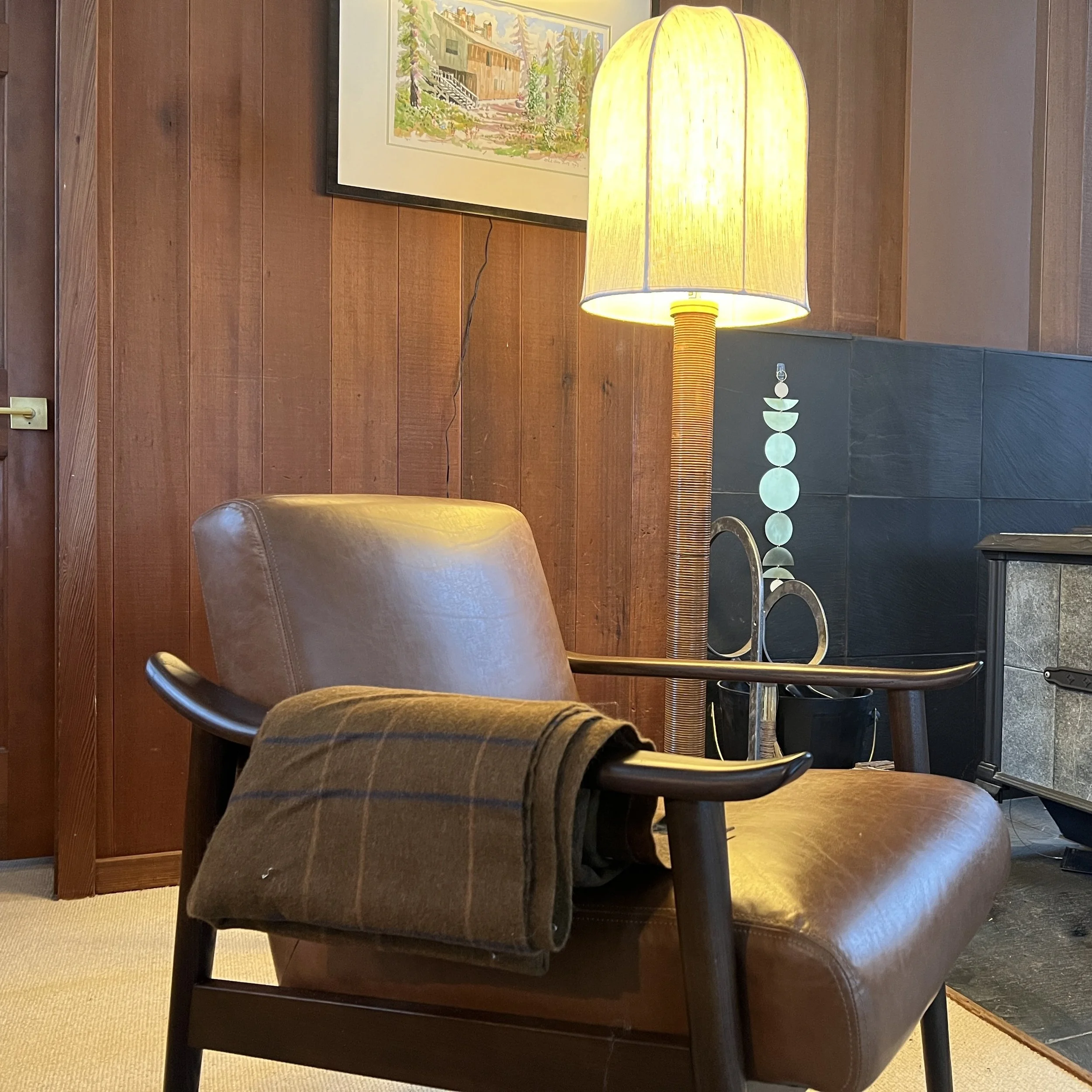
Arriving in the Room is a six-minute practice with no breathing instructions and no closed eyes. You sit in a chair and look around. You find a few things that are pleasant to focus on, notice where the walls and the doors are, listen for the farthest sound and the nearest, and feel one place where the chair or the floor is holding you up. Then you look around again. That’s all of it.
It can sound like a practice with the meditation taken out. I’d argue it’s the part that should come first, and there’s more behind that than my saying it is so.
Meditation has unpleasant side effects.
In 2021, a team at Brown University interviewed 96 people who had completed an eight-week mindfulness program. Fifty-eight percent reported at least one unwanted effect they tied to meditating. For 37 percent, it got in the way of daily life, and for 6 percent, the trouble lasted more than a month. People described feeling anxious, overstimulated, flat, or far away. A survey of 434 American meditators published the same year found something similar: about a third reported an unwanted effect, with anxiety at the top of the list.
To be clear, these studies don’t show that meditation is harmful on balance. They were small, and the Brown group was mostly middle-aged women who had signed up for help with stress, anxiety, or depression. In the survey, the people who’d had a rough time were as glad they had meditated as everyone else, nearly nine in ten. The lead researcher at Brown compares it to aspirin: the side effects don’t cancel the benefit. They do belong on the label.
Looking inward isn’t always the gentle direction.
Many beginner instructions point attention inside: the breath, the heartbeat, the body from scalp to toes. Researchers call that inward sense interoception. Willoughby Britton, who led the Brown study, has argued that it follows an upside-down U. Too little awareness of the body can lead to negative health outcomes; too much awareness is linked to anxiety, panic, and depression.
Similarly, closing the eyes isn’t always restful. In brain-imaging studies of people lying in the dark, closed eyes went with what the researchers called an “interoceptive” state, busy with imagination and sensation. Open eyes went with an “exteroceptive” one, organized around attention and eye movement. That’s a lab finding about brain activity, not behavior; however, it’s not too much of a stretch to imagine that people might feel unsafe with their eyes closed for various reasons.
Looking around is older than meditation.
Pavlov noticed that his dogs turned toward any new sound or sight before they did anything else, and he called it the “what is it?” reflex. People do it too. (You did it the last time you were startled by a door slamming.) The practice borrows that reflex and slows it down. You look, you find out what’s here, and you familiarize yourself with the space. Checking where the exits are belongs to the same family. That’s an intelligent practice, not a symptom.
And practicing with open eyes is nothing new.
In the Zen tradition, we sit facing a wall with our eyes open. Dōgen, the thirteenth-century teacher who founded our school in Japan, wrote it into his instructions for seated meditation: “Your eyes should always remain open.” So if you’ve been told that real meditation happens behind closed lids, about eight hundred years of people staring at walls would like a word.
What I can’t tell you.
Nobody has run a trial on six minutes of looking at a doorknob, as far as I know. What I’ve given you is the reasoning behind the practice, and it comes with no guarantee. It won’t fix a hard day. It might help you find ease and feel steady enough to do the next thing.
Look up from the screen and find three things that are not unpleasant to look at. That’s the first minute.